As we gather in Toronto for the first Women in Music Canada Global Music Summit during International Women’s Week we are releasing an update to Share the Air, SongData’s study of Gender representation on Canadian radio.
The timing is intentional.
We partnered with Women in Music Canada on the original 2024 report, and as the Global Summit convenes in Canada for the first time, bringing together women and gender-diverse leaders from across the global music industry, we felt it was time to take the pulse.
- Where does representation on Canadian commercial radio stand today?
- Has visibility translated into structural change?
- Or has the system remained intact?
- And how do things look on US radio?
Access the panel slides to follow along while we talk and the 2026 update!
Looking Back: What Share the Air Revealed
In June 2024, in partnership with Women in Music Canada, we released Share the Air — the first national study tracking gender and racial representation on Canadian commercial radio.
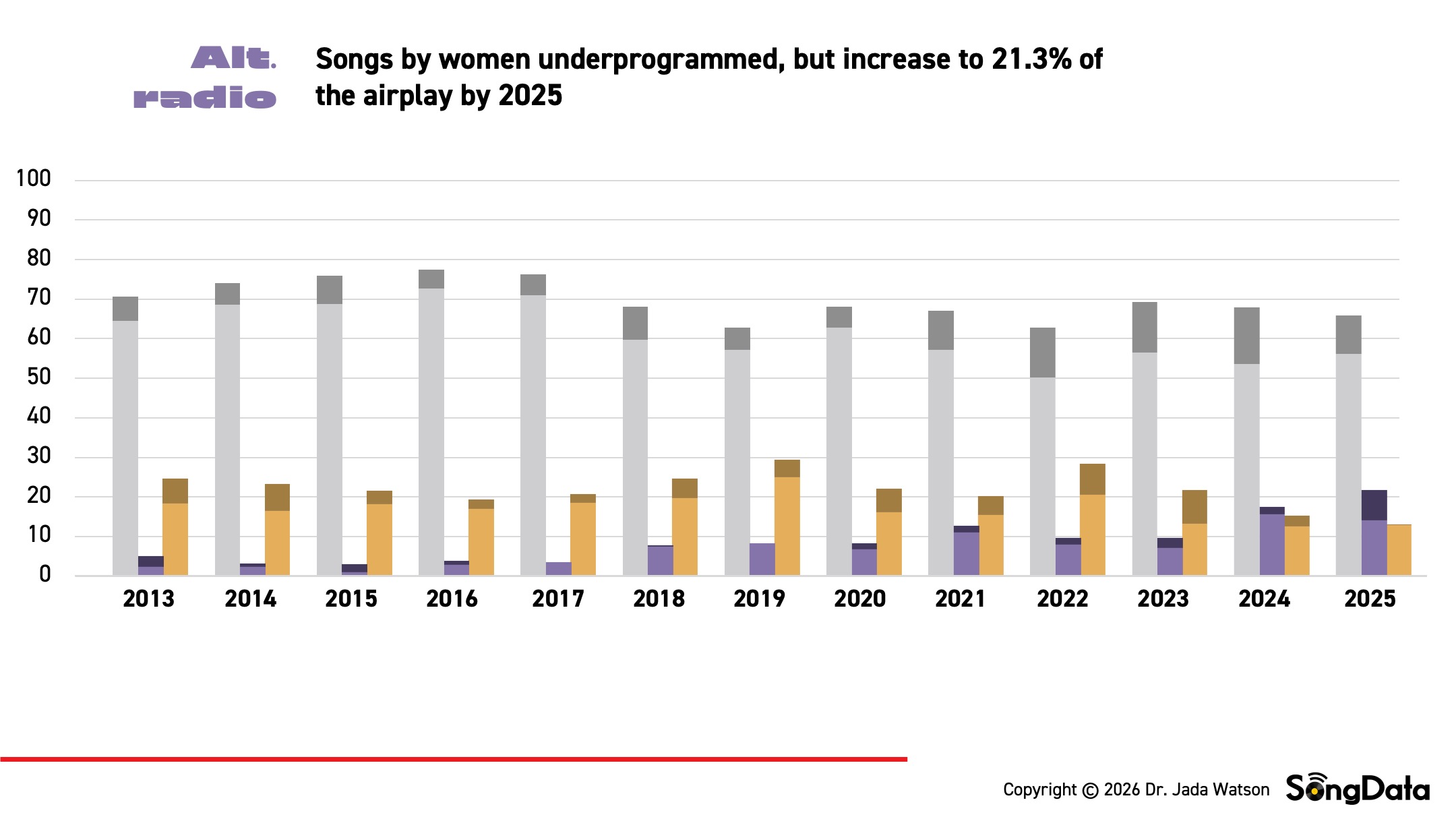
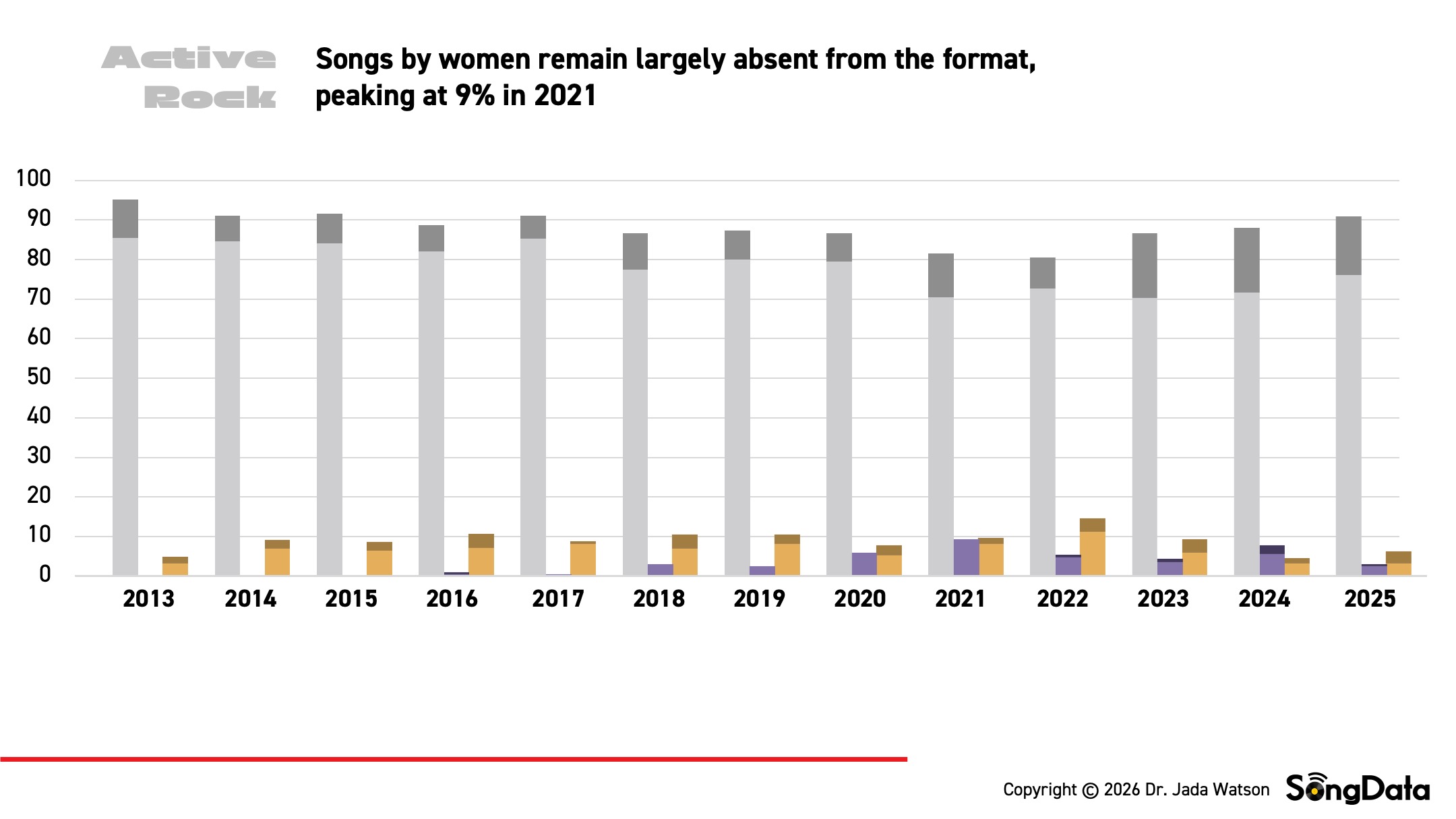
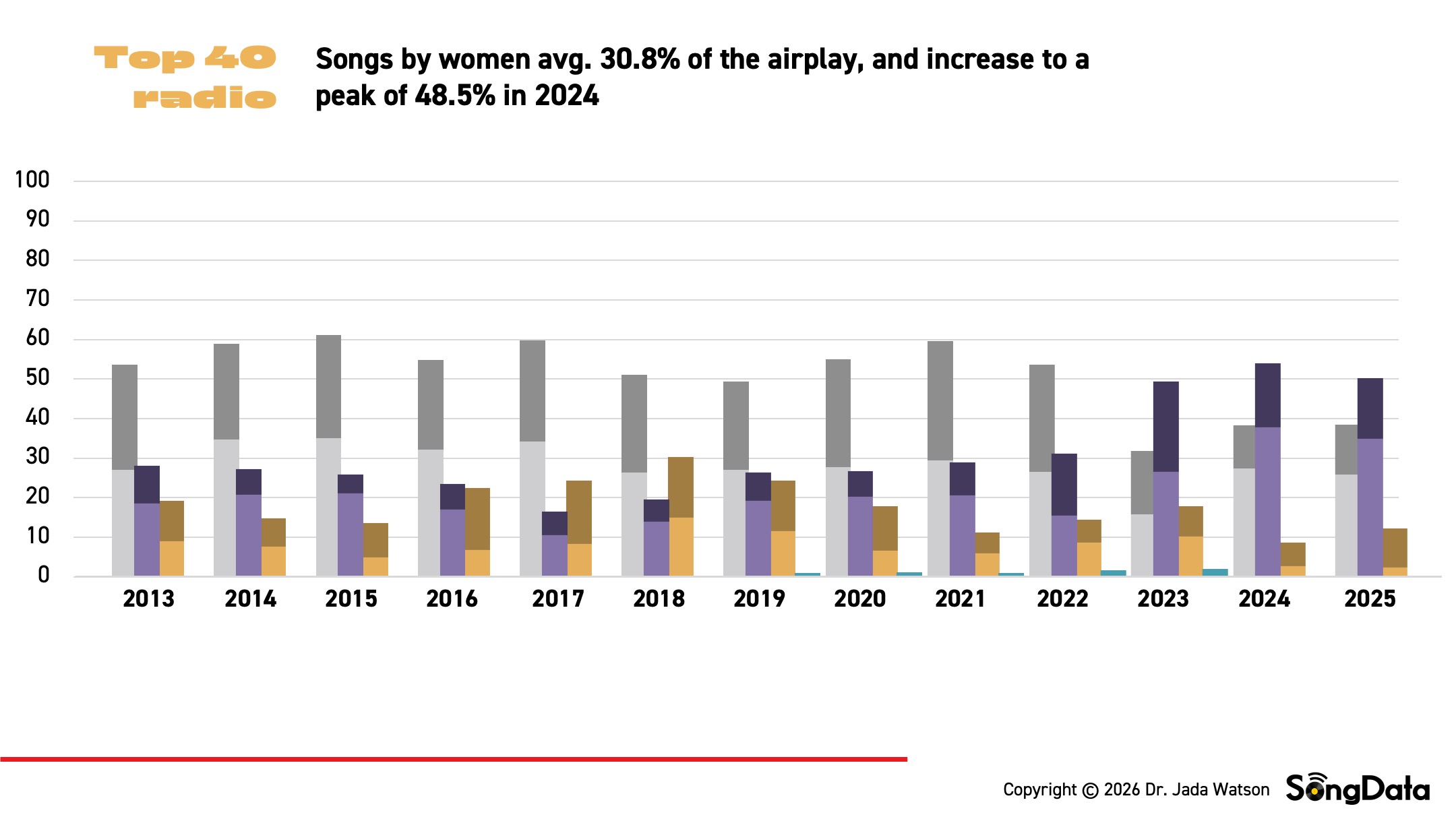
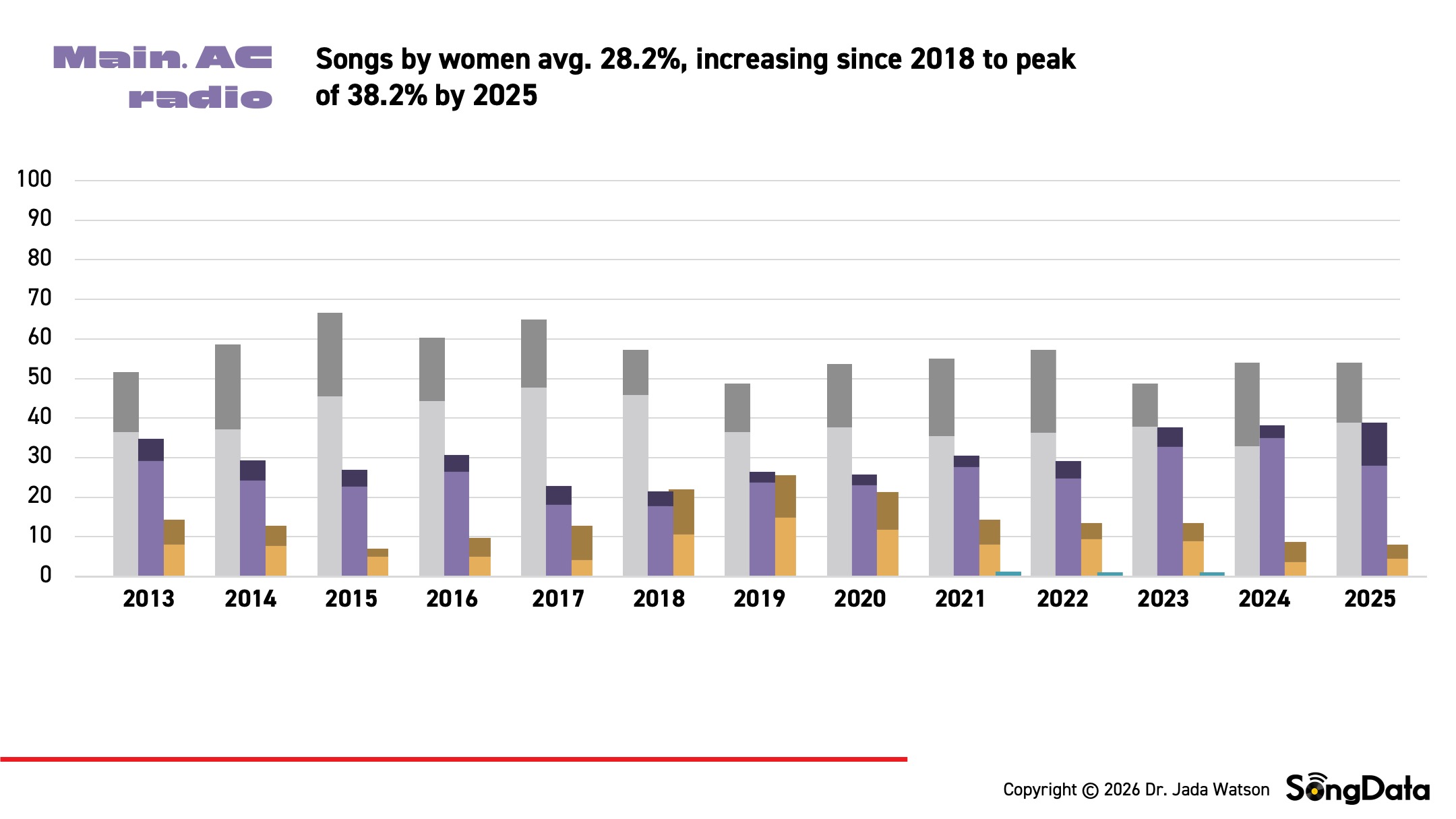
Analyzing the top 150 songs across six formats (Country, Alternative Rock, Active Rock, Top 40, Mainstream AC, and Hot AC) from 2013–2023, alongside weekly 2023 airplay data, the results were clear:
Women and Trans* artists were systematically underprogrammed — and racial inequity was even more entrenched.
Country and Rock Formats: Structural Exclusion
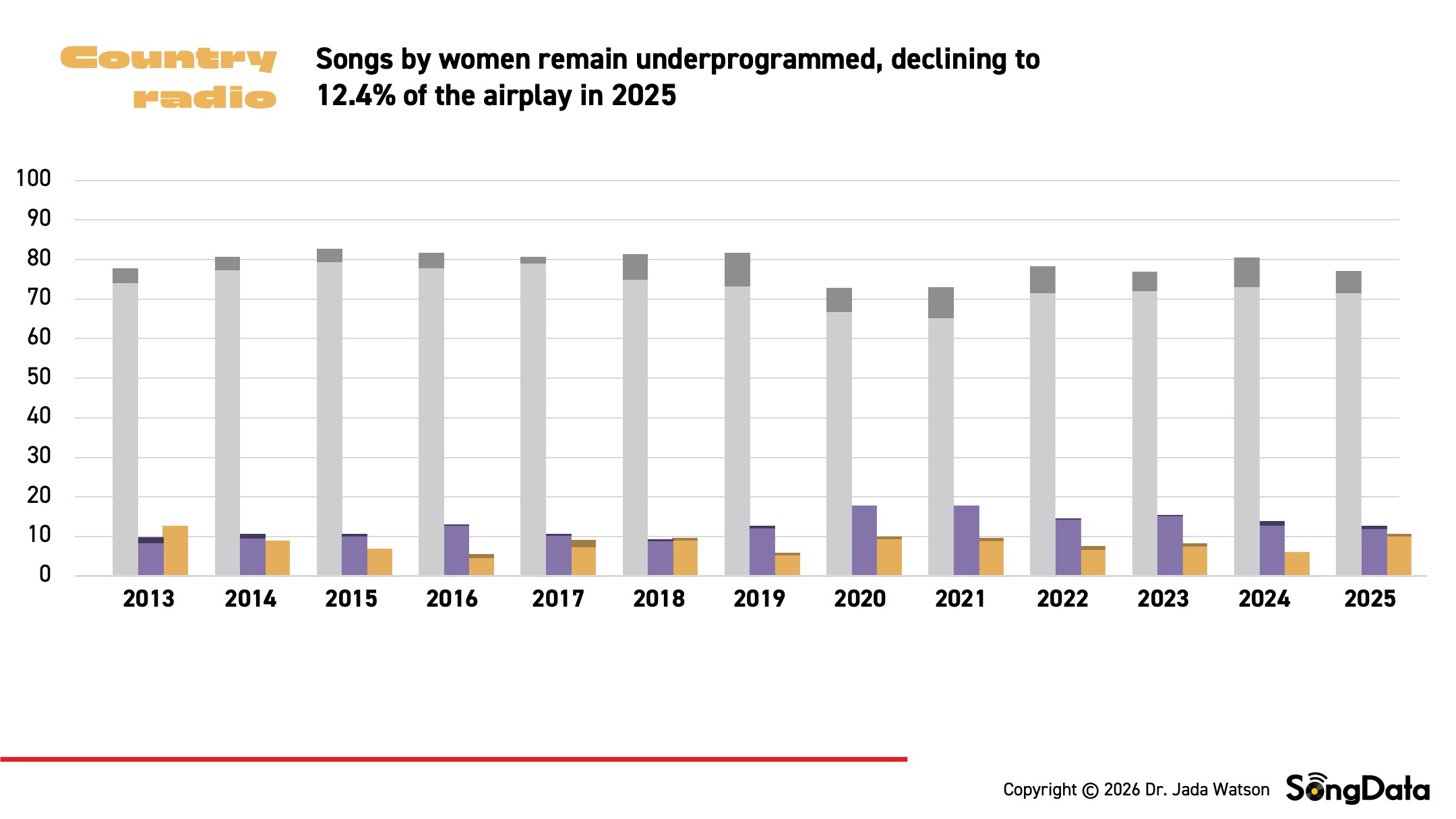
On Country, Alternative Rock, and Active Rock, songs by women averaged just 8% of year-end airplay over eleven years. Women of colour averaged less than 1%.
In listening terms:
- Country: ~2 songs per hour
- Alternative: ~1 song per hour
- Active Rock: ~1 song every 4–5 hours
Active Rock programmed songs by men to women at a 47:1 ratio.
Even more concerning, representation on these formats declined in the final years of the study after a brief peak in 2021.
Pop Formats: Presence Without Power
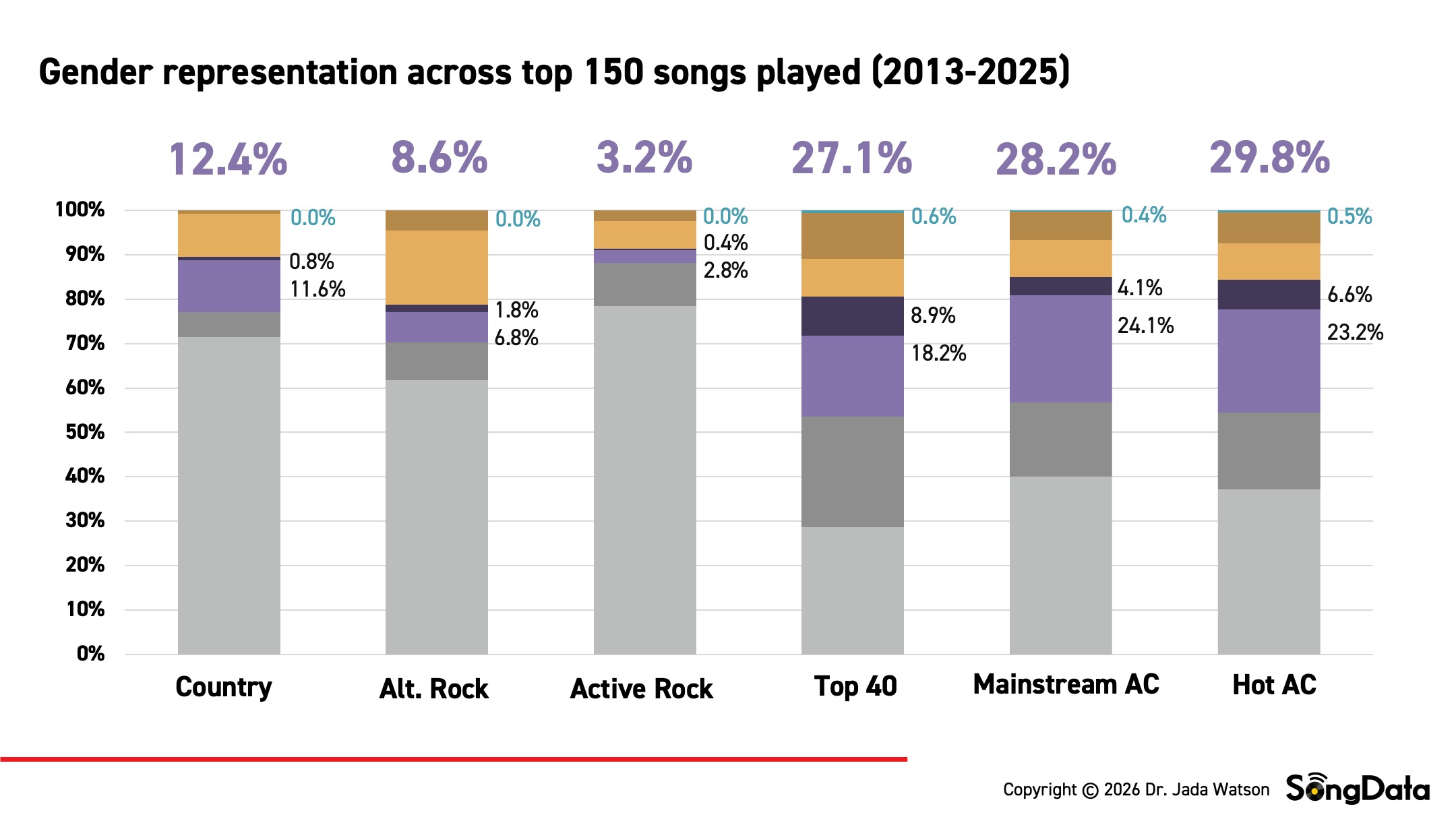
Top 40, Mainstream AC, and Hot AC showed greater diversity, with songs by women averaging 36% of airplay. But most of that representation favoured white women; women of colour averaged roughly 6–11%.
Trans* artists were nearly absent across formats.
And Canadian women, Trans* artists, and artists of colour faced an additional disadvantage: even when programmed, their songs were less likely to reach top-spun positions or be retained in recurrent and gold rotation. Their music moves through the system faster… and disappears from cultural memory sooner.
The 2024–2025 Update: What Has Changed?
With new data added, we see confirmation of what many suspected:
- Structural Stability, Not Structural Change: Across all six formats, the system shows continuity rather than transformation.
- Visibility Is Not the Same as Equity: Women’s presence rises in headline moments — a #1 song, a Top 10 spike, a breakout year — but inclusion remains uneven across rotation tiers.
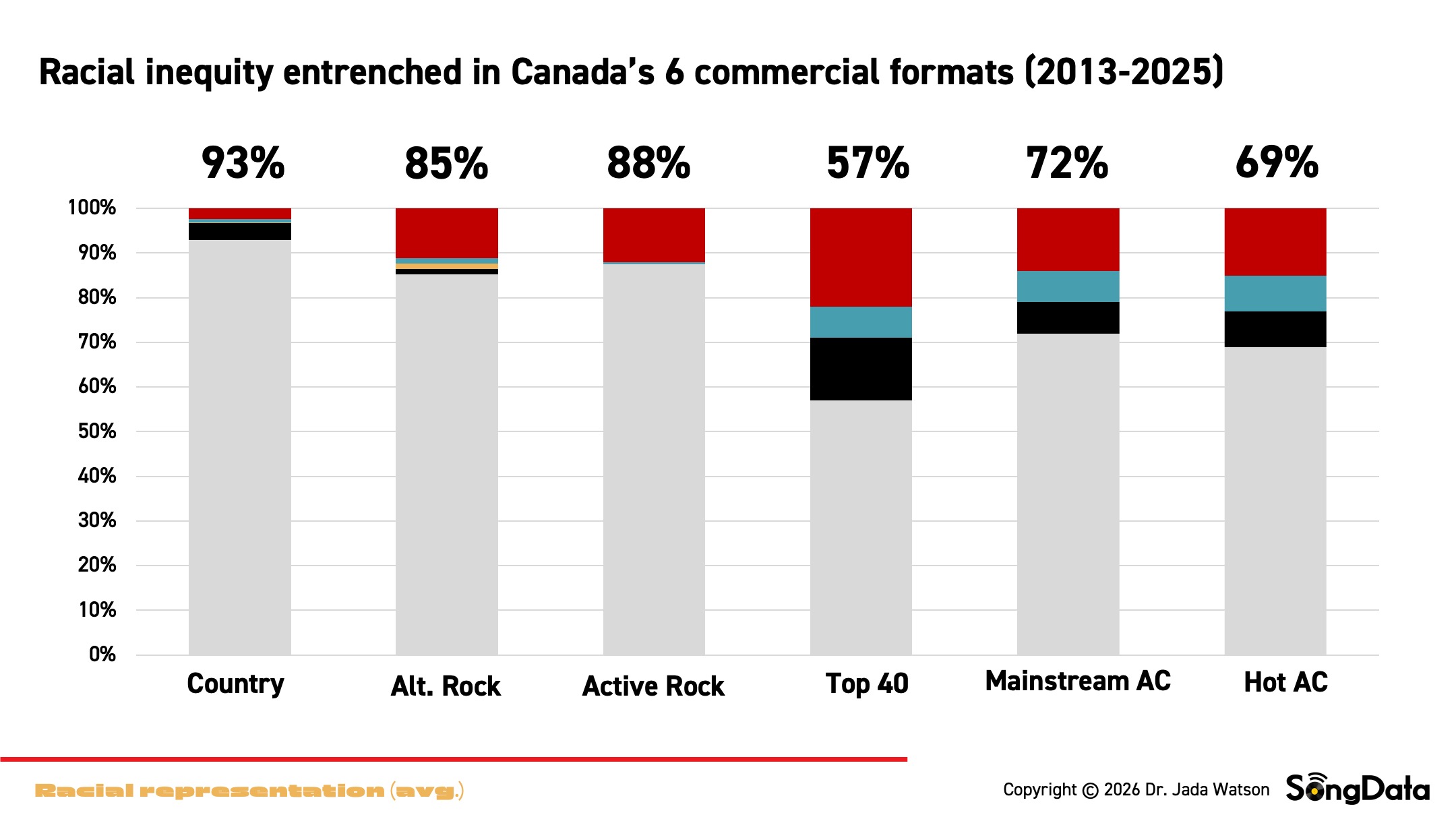
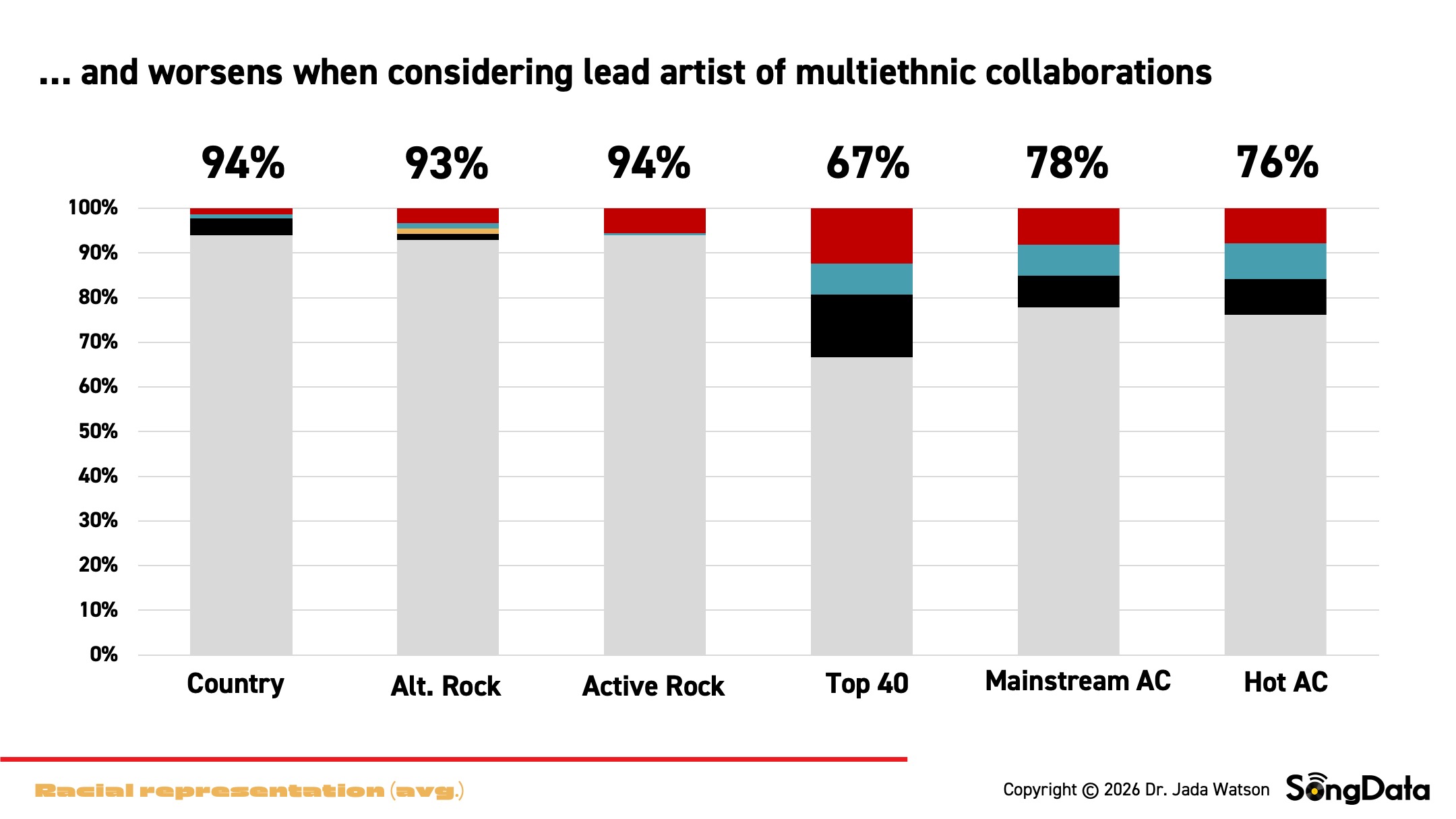
- Racial Inequity Is Deeply Entrenched: While gender representation shows occasional fluctuation, racial diversification remains far more constrained. Most formats continue to program between 70–90% white artists.

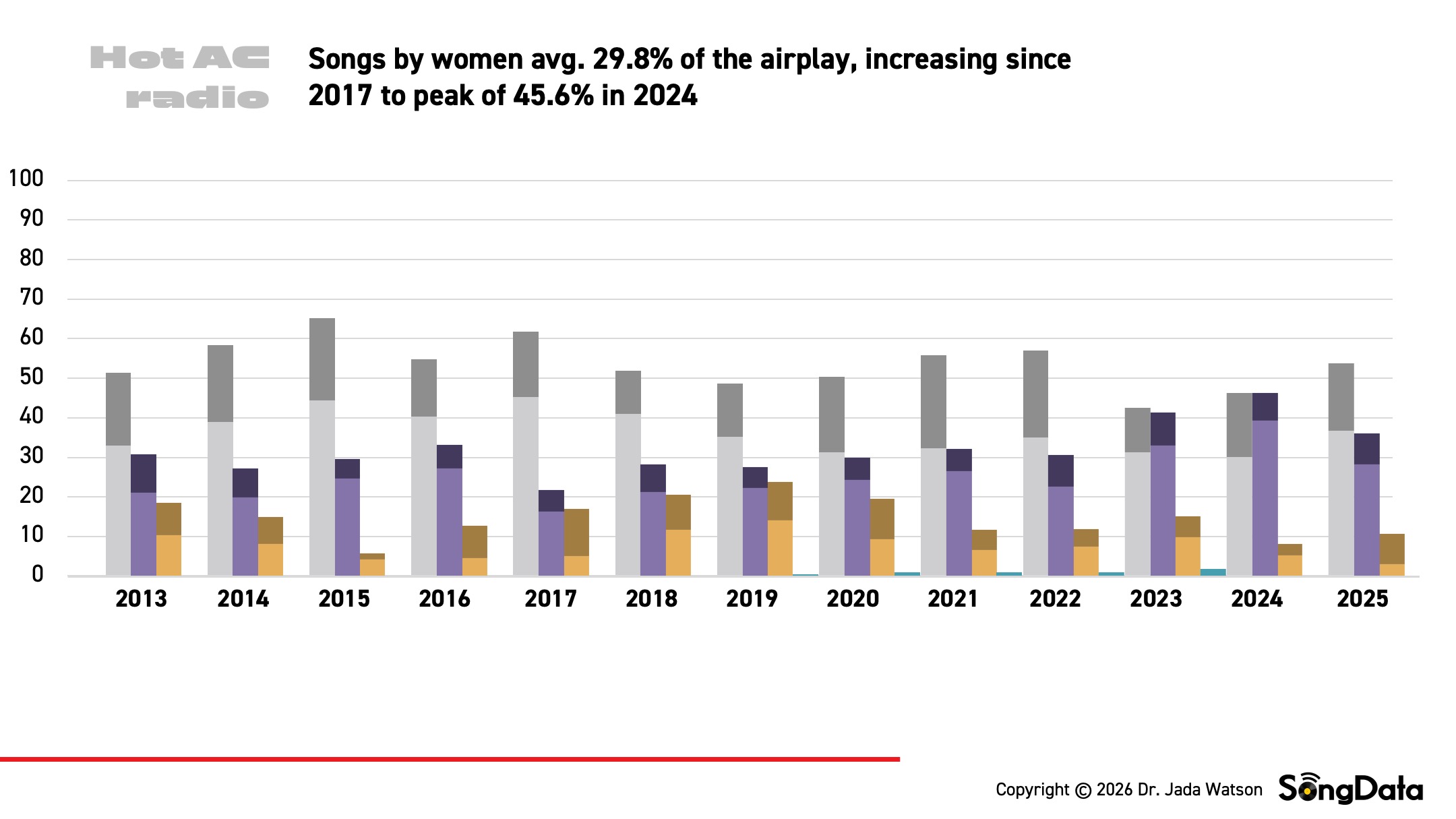
What about US formats?
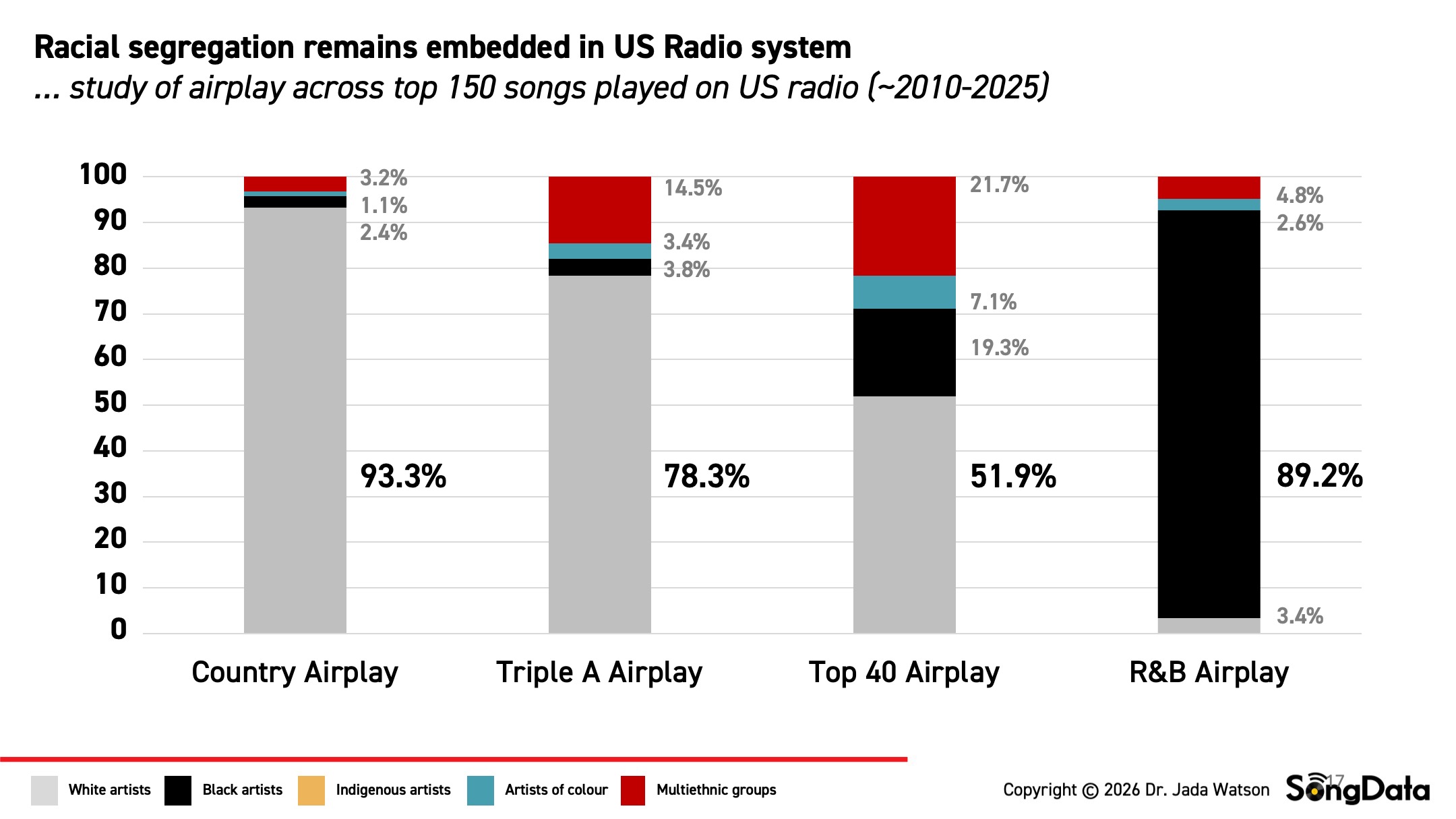
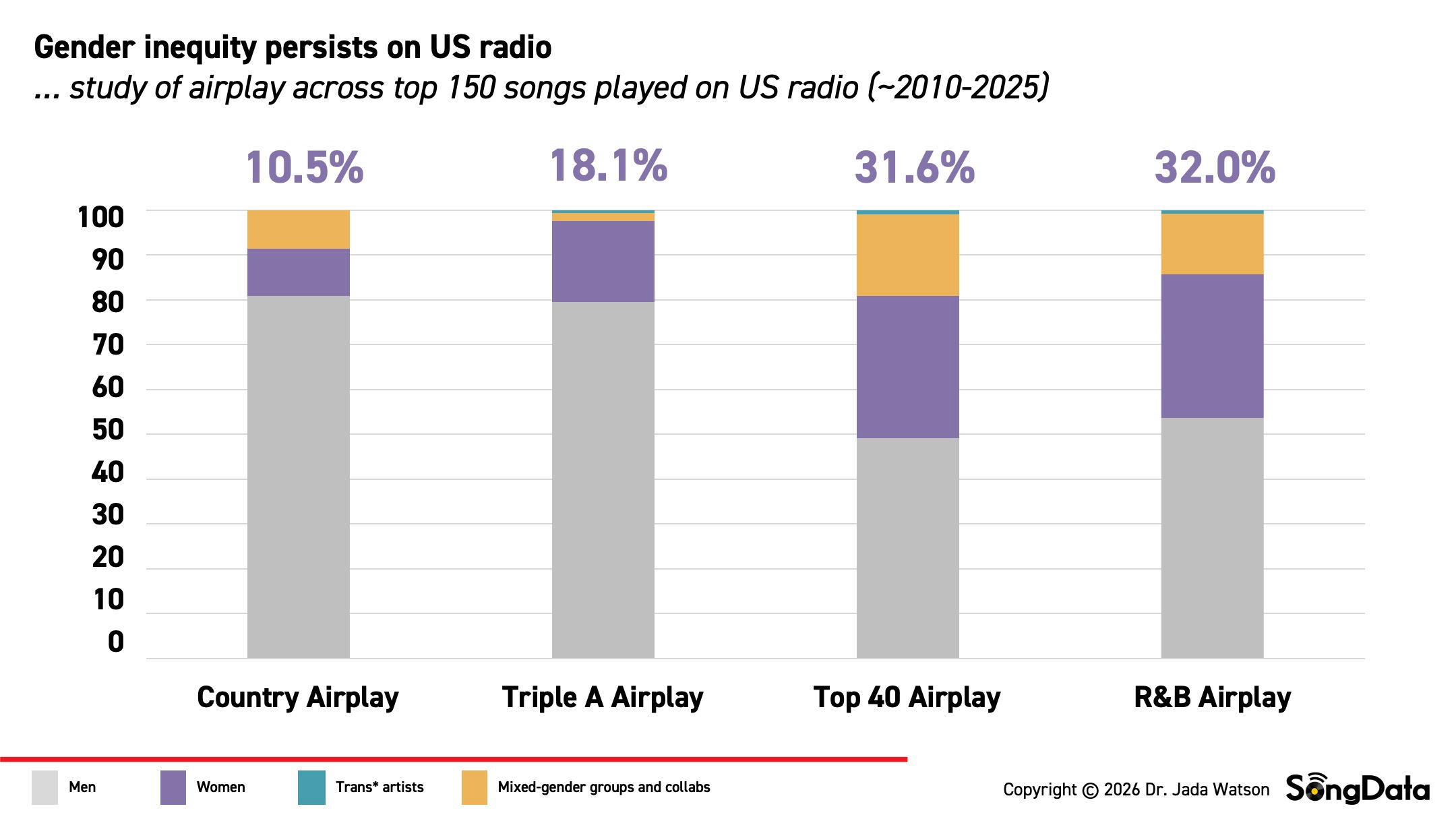
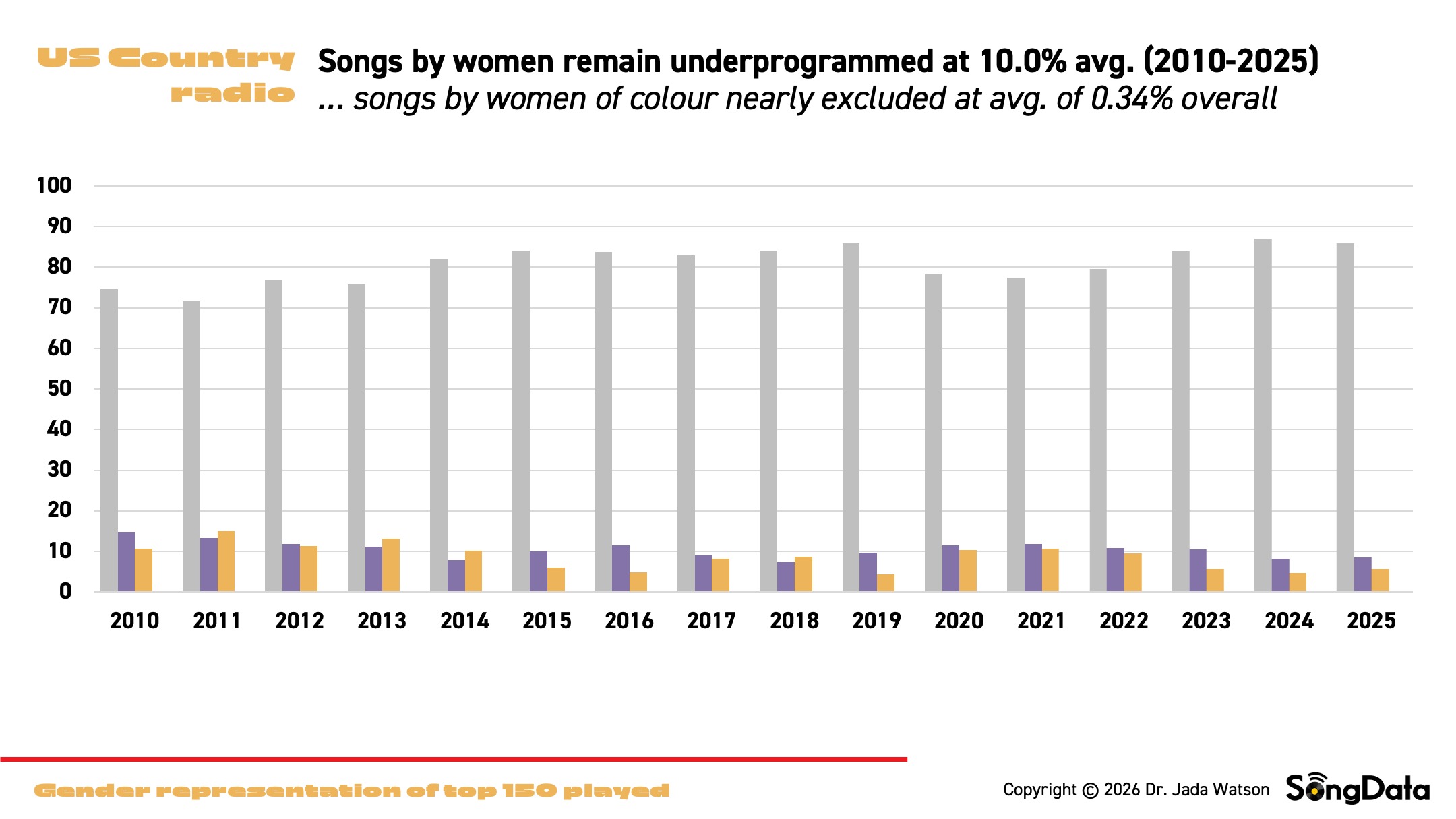
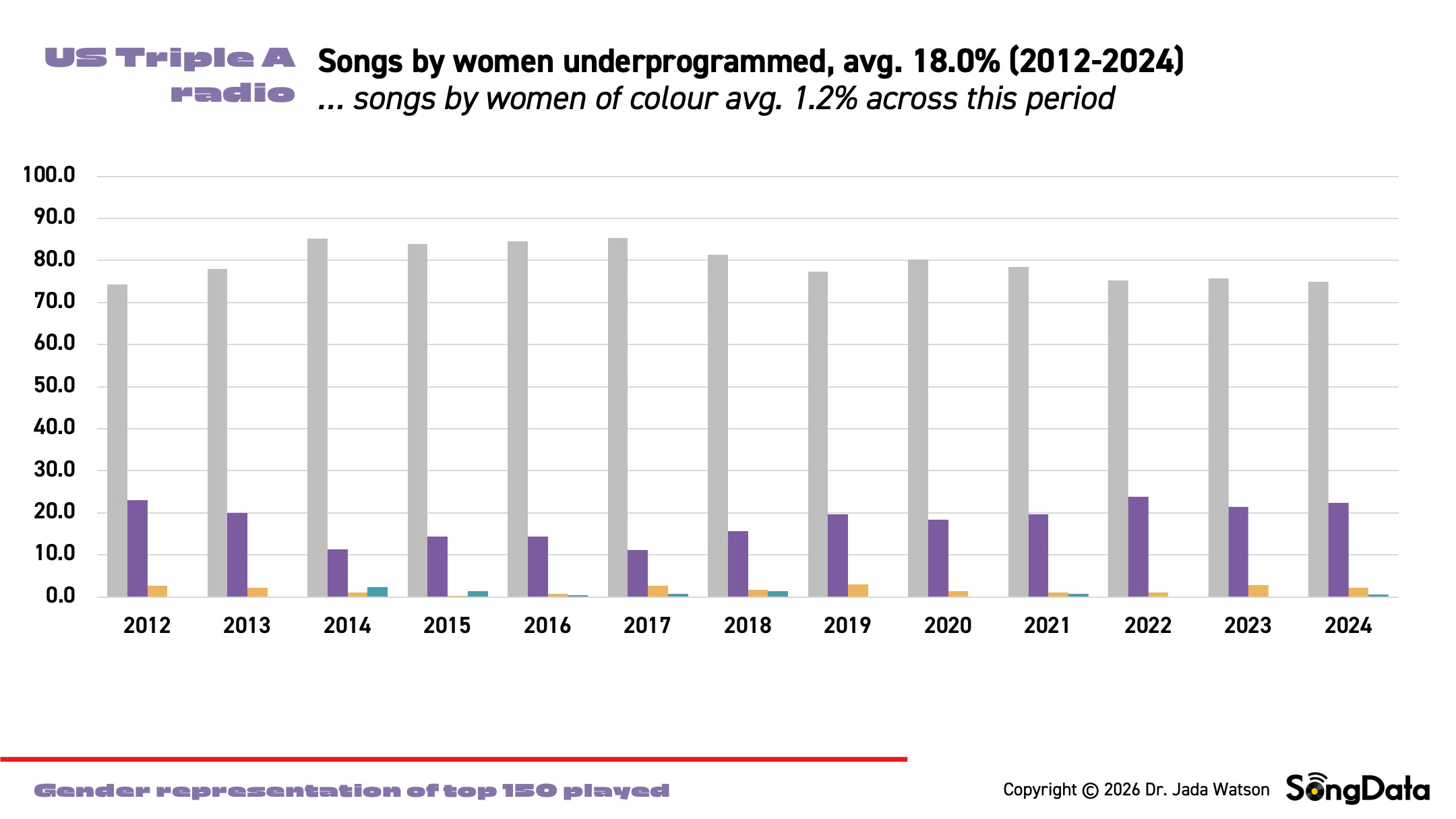
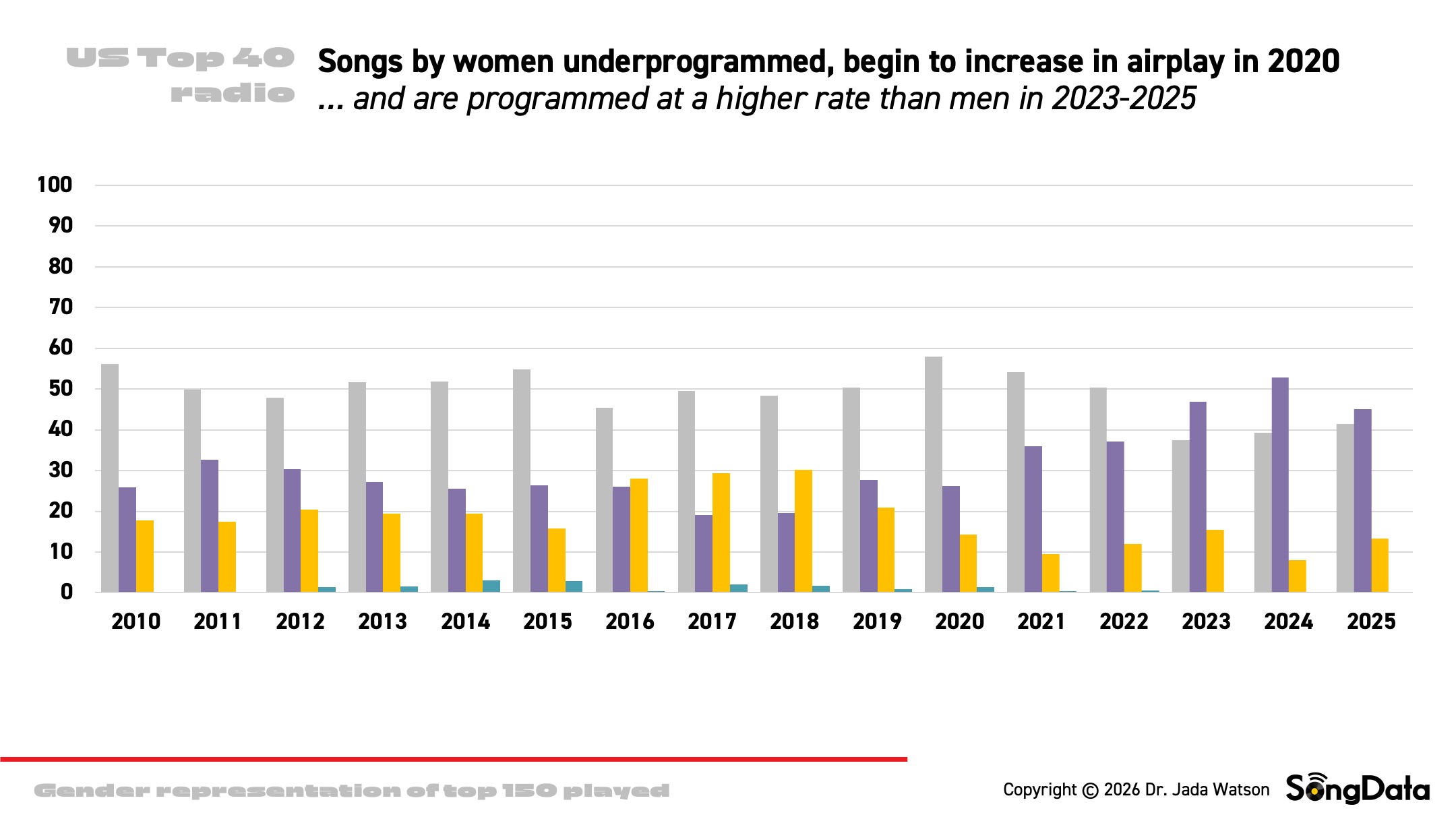
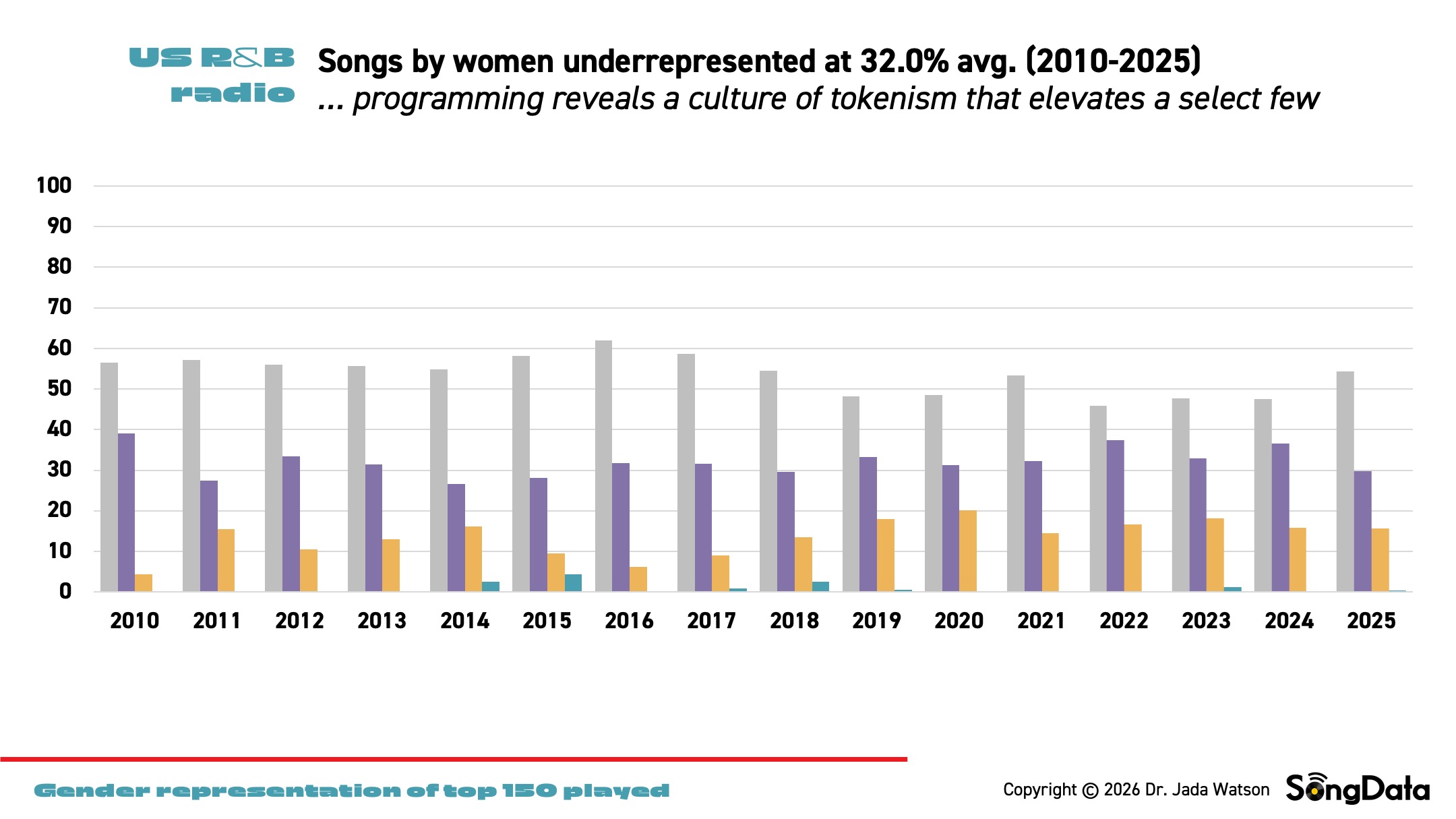
Across Country, Triple A, Top 40, and R&B, format boundaries remain remarkably consistent from 2010–2025. Racial segmentation and gender imbalance persist with only limited disruption, indicating stability in programming architecture rather than systemic transformation.
Gains for women are format specific: Airplay for songs by women improves meaningfully only in Top 40 beginning around 2020, while Country and Triple A remain heavily male-dominated. Progress appears conditional — dependent on format culture rather than industry-wide reform.
Racial segregation remains core to the industry’s structure and format culture: Country and Triple A continue to program overwhelmingly white artists, while R&B remains overwhelmingly Black. Top 40 is the only space approaching cross-racial mixing, reinforcing that format silos still shape exposure and opportunity.
Where We Go From Here
Inequity on commercial radio is structural. It is embedded in all levels of programming.
In the original Share the Air report, our findings led to a set of practical interventions for program directors. Those recommendations remain true today:
- Don’t rely on specialty programming
- Play ‘em back-to-back
- Rebuild station golds
- Champion unsigned artists
- Aim higher than CanCon
- Develop new audience testing metrics
- Know your station
These were not symbolic suggestions. They were structural ones.
The extended results released today reinforce that the issue is not a lack of standout songs or breakthrough artists. It is a lack of sustained structural change.
It will not be solved through symbolic inclusion or isolated breakout songs.
Build from the bottom. Break the Ceiling: On Country and Rock formats, equity requires intentional upward movement — sustained rotation that translates into power positions, not just playlist presence.
Depth. Not Tokens: On pop-oriented formats, sustainable equity means distributing opportunity beyond the top few artists and building depth across all tiers of rotation.
Visibility alone is not enough. Change will not come from standout songs or isolated artists.
It’s time to #ShareTheAir, to move beyond symbolic inclusion and commit to sustained, equitable rotation — redistributing power, not just presence.
Read the 2026 update!
Check out other studies and posts:
- Data presented at Black American Music Summit (Feb 2025)
- Data presented at the Measure of Music (Feb 2025)
- Read the Share the Air launch article or visit the project page (June 2024)
- Learn more about back-to-back airplay on US country radio in this study done in collaboration with The Pudding (May 2023)
- Visit RadioData to learn more about all radio studies (2019-present)